
Creating Quiet Luxury: In Partnership with Acoustic Consultant Ed Clarke
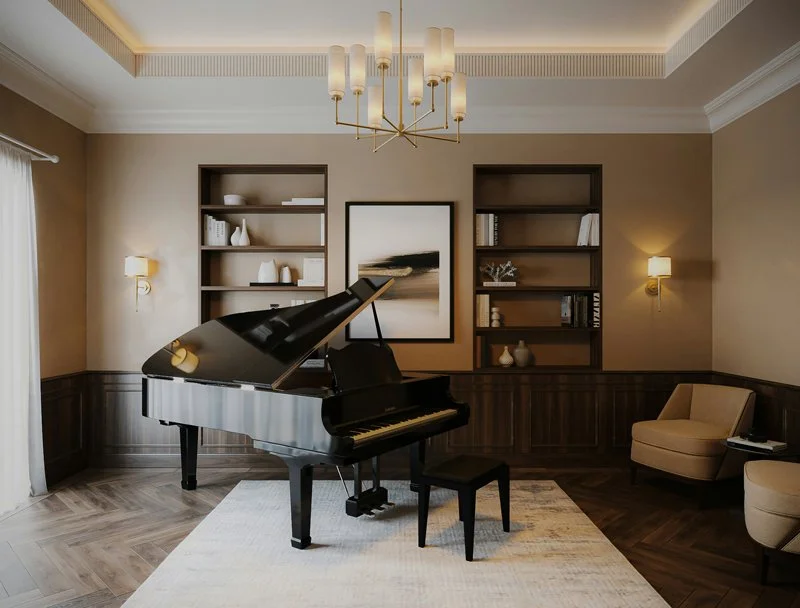
At Ideaworks, we never stand still. We continually explore new ways to enrich our clients’ experiences and transform their spaces. Through carefully chosen partners, we enable new possibilities for our clients and ensure that every project benefits from complementary expertise, helping us create the seamless, elevated living experience our clients expect.
Partnering with Experts in Soundproofing Solutions

One of those partners is acoustic consultant Ed Clarke, whose knowledge enables Ideaworks to go beyond audio. From managing environmental noise to shaping the behaviour of different spaces, Ed helps us ensure that homes and private spaces are not only legally compliant but also discreet, refined, and consistently comfortable.
With over 35 years of experience in acoustics, noise, and vibration, Ed is a former Chair of the Association of Noise Consultants, contributor to the Institute of Acoustics, and trusted advisor on countless complex projects. His approach combines technical integrity with collaboration, bringing assurance to every stage of a project.
What Clients Should Know About Noise Management
We asked Ed how his expertise helps us design environments that feel refined, private, and effortless - and what clients should really know about acoustics.
IW: Can you really make a room completely “soundproof” – could I enjoy my music collection at full volume, yet the world outside remains blissfully unaware?
EC: Honestly, I don’t like that word. It suggests no sound ever escapes, which isn’t realistic. What we really aim for is the right level of sound control for the space: enough that noise is neither intrusive nor distracting, and that privacy is preserved.
IW: How do you measure sound?
EC: Sound is measured in units called decibels. This is caused by pressure fluctuations in air. At its most technical, we measure it in Pascals. But the range we deal with is enormous – from the quietest sound we can hear at 0.00002Pa, to the threshold of pain at around 20Pa – a million times greater. That’s where decibels come in: they make the numbers manageable, and the maths more fun! 0dB is the faintest sound we can hear, while 120dB is painfully loud.
IW: If a room is very quiet, does that mean the acoustics are excellent?
EC: Not necessarily. Acoustics isn’t just about how a room sounds in one moment – it’s about how it behaves in all scenarios. A quiet space today doesn’t mean you won’t hear the neighbour’s toddler on a drum kit tomorrow. True acoustic quality is about consistent performance, whatever’s happening around you. When it’s done right, it should feel effortless – unremarkable in the best possible way.
IW: Can thick carpets and heavy curtains solve acoustic problems?
EC: They help – but only with part of the picture. Soft finishes reduce echo inside a room, but they won’t stop sound from passing through walls or floors. For real discretion and privacy, we need to look at construction: junctions, isolation layers, and detailing hidden beneath the finishes. That’s where the real difference is made.
IW: If my project meets Building Regulations, isn’t that enough?
EC: Meeting regulations is like using a newspaper as an umbrella – functional, but far from luxurious. Our clients expect more, and rightly so. Acoustic design should deliver ease, privacy, and sophistication – the kind of quiet luxury that lets you sleep peacefully, even when life is happening all around you.
IW: What’s the best point in a project to consider acoustics?
EC: Architects, engineers, and acousticians collaborate from the start to create true acoustic quality. That’s how we create environments where comfort and refinement feel effortless. Waiting until the layout is finalised, it’s almost always too late. Retrofitting acoustics at the end is costly, invasive, and rarely delivers the best results.
IW: Finally, what’s the difference between sound insulation and sound absorption?
EC: Think of sound like water. To reduce an echo in a room, you use something absorptive, such as a sponge. However, if you want to prevent water from leaking into the next room, you need something watertight. Sound absorption controls how echoey a room feels; sound insulation controls how much sound passes between rooms. Both matter – but they do very different jobs.
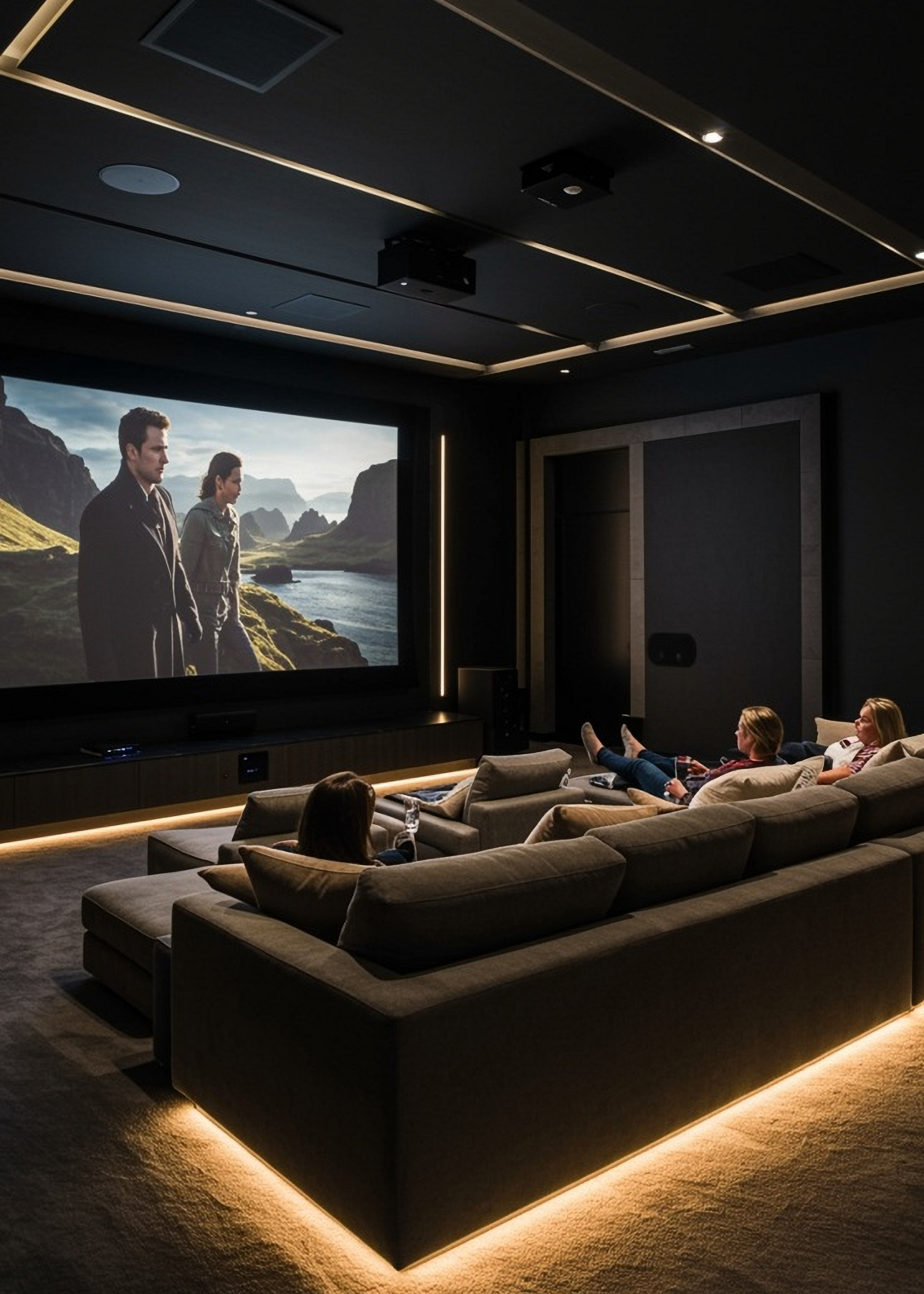
It’s clear from our conversation that acoustics isn’t just about controlling noise, it’s about shaping environments where our clients can live, relax, and entertain with ease and assurance. Whether it’s managing environmental sound, controlling noise transfer, or tailoring spaces for entertainment, acoustics underpins the experience of elevated living.
Why Soundproofing Solutions Matter to You
Acoustics is often overlooked until it becomes a problem, but it plays a crucial role in creating spaces that feel elegant, restful, and truly private. With Ed Clarke’s expertise, Ideaworks now goes beyond delivering audio to deliver true sound control: managing environmental noise, shaping how spaces perform, and ensuring privacy and discretion. This complementary expertise strengthens our offering and is part of how we help our clients achieve truly elevated living.
Whether you’re planning a luxury residence, a private entertainment space, or a multi-dwelling project, now is the time to think about acoustics – not later.
Get in touch with our team to learn how our new supplementary services can elevate your next project: sales@ideaworks.co.uk